

US Navy

Marine Species Monitoring
Western gray whale detections in western Pacific
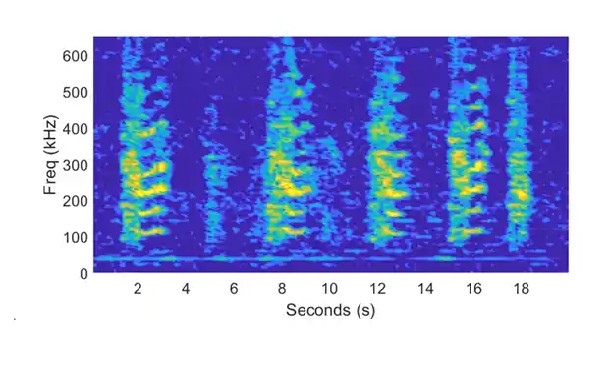
Gray whale vocalizations are well-known and have been detected on mobile U.S. Navy passive acoustic monitoring (PAM) systems for decades. Gray whales produce highly variable and complex signals. Given some historical and conservation interest in the overall distribution and migratory patterns and behaviors of gray whales in the north Pacific, the Navy has conducted systematic monitoring for the calls of gray whales in times and areas that would inform species distribution patterns. The vocalizations monitored on the Navy PAM systems include a combination of broadband, tonal, pulsed, and sweeps, showcasing the wide variety of calls this species produces. Some whale species have consistent and highly recognizable call structure, for example the fin whale, which make them easy to identify in acoustic records. However, this is not the case for gray whales which produce more variable, less consistently structured, and ‘rough’ sounding signals.
Examples of tonal and broadband calls are shown below. These types of calls, which are inconsistent with any other known baleen whale species in these regions in spectral and temporal content, were repeatedly and consistently detected in the western Pacific. These detections occurred in areas and times of year that are consistent with traditional breeding habitat of the critically endangered western gray whale population.
Information provided by Marine Acoustics, Inc.

